
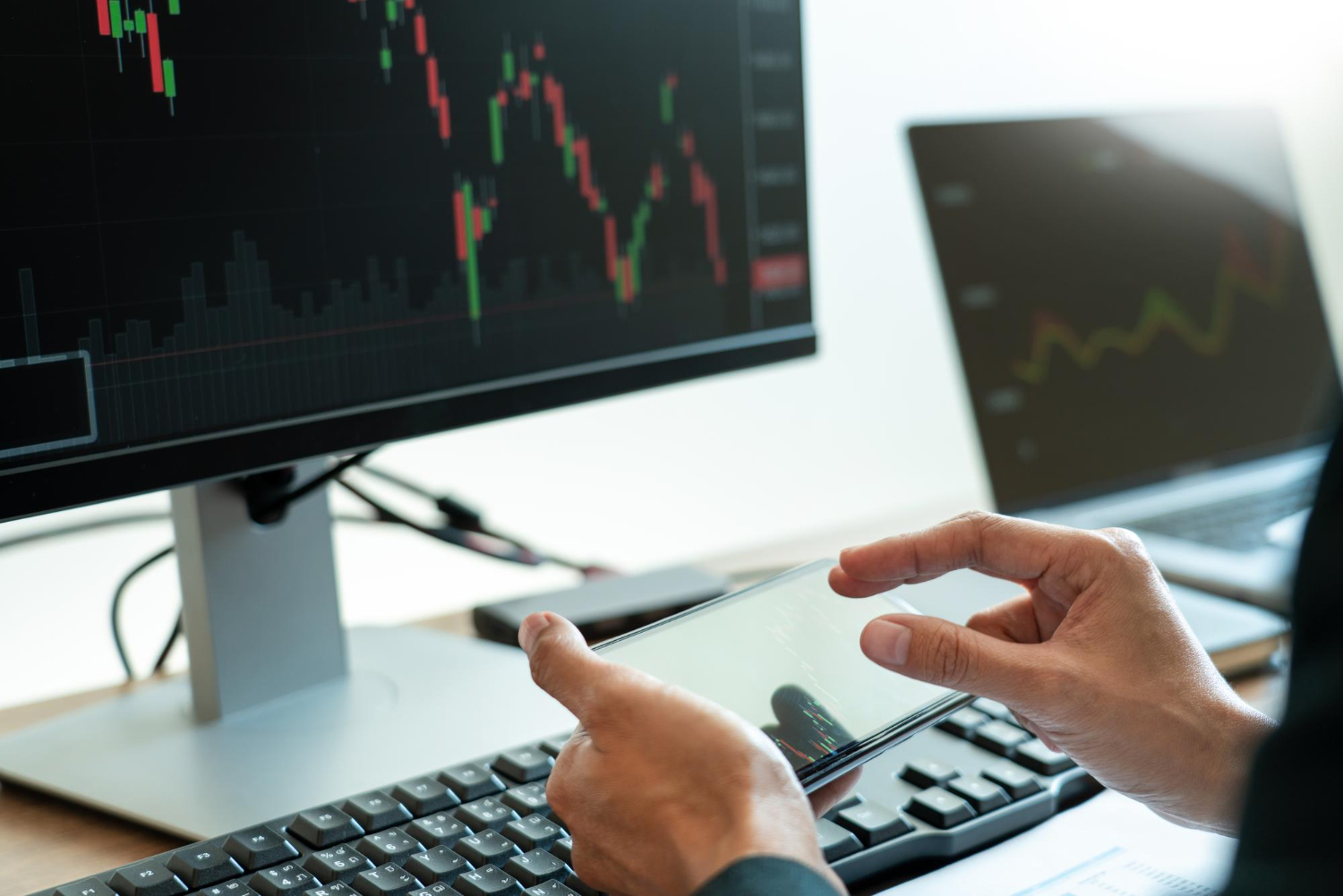
Navigating the Forex market in Ghana presents unique opportunities and challenges, making effective risk management essential for success. As traders face market volatility, leverage implications, and liquidity issues, understanding the intricacies of risk becomes critical. This article explores key risks in Forex trading, best practices for safeguarding investments, and essential tools for managing risk effectively within Ghana’s regulatory landscape. Equip yourself with the knowledge needed to thrive in this dynamic trading environment.
Overview of the Forex Market
The Forex market facilitates the trading Forex of currency pairs, with the USD/GHS pair exhibiting volatility of up to 5% during peak trading Forex hours. The trading Forex market operates continuously, segmented into major trading sessions: Sydney, Tokyo, London, and New York. Each session influences trading Forex activity; for example, the overlap between the London and New York sessions typically results in heightened trading Forex volume.
While major currency pairs such as EUR/USD and GBP/USD dominate trading Forex, the GHS often mirrors trends in commodity prices and economic policies. Recently, there has been increased interest in the adoption of digital currencies within the Ghanaian market, leading to notable volatility in both the USD/GHS and Bitcoin/GHS pairs as local investors explore alternative assets through trading Forex.
Importance of Risk Management
Effective risk management is crucial for traders in Ghana to safeguard their capital and increase the likelihood of successful trades. Research indicates that over 70% of Forex traders experience losses stemming from inadequate risk management strategies.
Key components of effective risk management include principles such as position sizing and the establishment of risk-reward ratios. For example, if an individual risks 2% of their capital on each trade while pursuing a 1:3 risk-reward ratio, there is the potential to recover three times the amount risked.
Utilizing tools such as the Kelly Criterion can further optimize position sizes based on win rates and average gains, significantly enhancing trading outcomes.
Identifying Risks in Forex Trading
Forex trading encompasses various inherent risks that traders must recognize and manage to effectively mitigate potential losses.
Market Risk
Market risk refers to the potential for financial loss resulting from adverse price movements, which can vary significantly due to economic events.
Key factors that can influence currency prices include changes in interest rates, geopolitical tensions, and the release of economic data. For instance, an unexpected increase in interest rates may lead to a strengthening of a currency as investors seek to capitalize on higher returns, whereas political instability could result in currency depreciation.
To mitigate market risk, investors should consider various strategies, such as diversification, which entails distributing investments across multiple currencies or asset classes. Additionally, utilizing tools like Forex trading platforms and risk management software can assist in monitoring positions, thereby maximizing potential gains while minimizing losses.
Leverage Risk
Leverage enables traders to manage larger positions with a smaller amount of capital; however, improper management can lead to margin calls and considerable losses.
In the context of Forex trading, utilizing a leverage ratio of 100:1 indicates that for every $1 in the trading account, the trader can control $100. This can significantly enhance potential profits; for example, if one invests $1,000 while employing 100:1 leverage, they effectively control $100,000 in currency.
It is crucial to select leverage ratios judiciously. A more conservative approach may involve a leverage ratio of 10:1, which provides a buffer against market volatility while still allowing for meaningful profit opportunities.
Traders should consistently assess their risk tolerance and implement appropriate risk management strategies, such as establishing stop-loss orders, to safeguard their capital.
Liquidity Risk
Liquidity risk arises when a trader is unable to execute trades at desired prices due to insufficient market activity or elevated volatility. For example, currency pairs such as EUR/CHF or AUD/NZD may encounter liquidity challenges, particularly during off-peak trading hours.
To mitigate these risks, it is advisable to engage in trading during peak market hours when trading activity is at its highest. Additionally, utilizing limit orders instead of market orders can be beneficial, as it allows traders to establish their desired price, thereby minimizing the effects of price fluctuations.
Furthermore, employing a reliable trading platform, such as MetaTrader or NinjaTrader, can enhance the trading experience by providing access to real-time data and advanced charting tools.
Best Practices for Risk Management
Implementing established risk management practices can assist Forex traders in Ghana in protecting their investments and improving trading outcomes.
Setting Stop-Loss Orders
Setting stop-loss orders is a fundamental practice that can effectively limit potential losses in the volatile Forex markets.
To establish a stop-loss order properly, one should first determine their risk tolerance, which is typically set between 1% and 3% of the trading capital. For instance, if the account balance is $1,000, a 2% risk translates to setting a stop-loss to limit losses to no more than $20 per trade.
In MetaTrader 4, the procedure involves right-clicking on the trade, selecting ‘Modify Order’, and entering the stop-loss level at a predetermined distance-based on thorough analysis-away from the entry price. This strategy not only safeguards capital but also accommodates for market fluctuations.
Diversifying Trading Portfolio
Diversifying a trading portfolio across various currency pairs can effectively reduce overall risk while enhancing potential returns.
To achieve effective diversification, it is advisable to pair currencies based on their correlations. For example, the EUR/USD and GBP/USD often exhibit similar movements due to shared market influences. In contrast, incorporating USD/JPY can help mitigate those risks, as it typically responds differently to global economic shifts.
Utilizing analytical tools such as MetaTrader or TradingView to assess correlation coefficients is essential; selecting pairs with a correlation coefficient of less than 0.5 is recommended for optimal diversification.
It is also important to regularly reassess the portfolio to adapt to changing market conditions and maintain a well-balanced investment strategy.
Tools for Managing Forex Risk
A variety of tools is available to assist Forex traders in Ghana in effectively managing risk and optimizing their trading strategies.
Risk Management Software
Several risk management software solutions, including TradeStation and TradingView, provide features that can significantly enhance traders’ risk assessment capabilities.
TradeStation, at a cost of $99 per month, offers advanced statistical analysis tools that enable users to create customized risk management strategies tailored to prevailing market conditions.
On the other hand, TradingView, available at no cost or for a monthly fee of up to $14.95, excels in charting capabilities, allowing traders to visualize risk levels through various indicators. Additionally, platforms such as Thinkorswim provide paper trading features, enabling traders to test their strategies without risking real capital.
To evaluate risk effectively, it is advisable for traders to integrate these tools. By conducting backtests on TradeStation while visualizing potential losses on TradingView, traders can establish a comprehensive and robust risk management framework.
Technical Analysis Tools
Technical analysis tools, such as MetaTrader 4 and TradingView, are critical for analyzing market trends and making informed trading decisions.
To utilize these tools effectively, it is advisable to begin by configuring key indicators, including moving averages and the Relative Strength Index (RSI), to assess market momentum. For example, in TradingView, users can easily add indicators by selecting the ‘Indicators’ button and searching for the desired tools.
Subsequently, it is important to analyze chart patterns, such as head and shoulders or double tops, to forecast potential reversals in the market.
Additionally, backtesting strategies by applying them to historical data is crucial; both platforms facilitate the simulation of trades, allowing traders to refine their approaches prior to committing real capital.
Regulatory Considerations in Ghana
A comprehensive understanding of the regulatory landscape is essential for Forex traders in Ghana to ensure compliance and protect their investments.
Understanding Local Regulations
Ghana’s Forex market is regulated by the Bank of Ghana, which establishes specific guidelines that traders must follow to ensure legal compliance.
Before commencing operations, traders are required to obtain a license, which is issued to brokers that meet established capital requirements and compliance standards. For example, brokers must possess a minimum capital of GHc500,000 and register with the Bank of Ghana while adhering to stringent anti-money laundering policies.
Additionally, traders are encouraged to remain informed about consumer protection regulations to promote transparency and fairness in trading practices. Utilizing compliance tools, such as compliance management software, can facilitate adherence to these regulations and reduce legal risks.
Choosing Regulated Brokers
Selecting a regulated broker is essential for safeguarding funds and ensuring compliance with local trading regulations in Ghana. To identify the appropriate broker, it is advisable to consider the following criteria:
- Verify regulation by the Securities and Exchange Commission of Ghana.
- Evaluate the available trading platforms.
- Review the associated fees.
For instance, reputable brokers such as GSE Securities, Databank Brokerage, and IC Securities are regulated and provide a variety of account types. Conducting thorough research on broker reviews and user experiences is crucial to assess their reliability.
Investing time in comparing your options is a prudent approach; this diligence can help you avoid potential scams and facilitate a more seamless trading experience.